The Opening Forum of the 14th Macau Business Aviation Exhibition
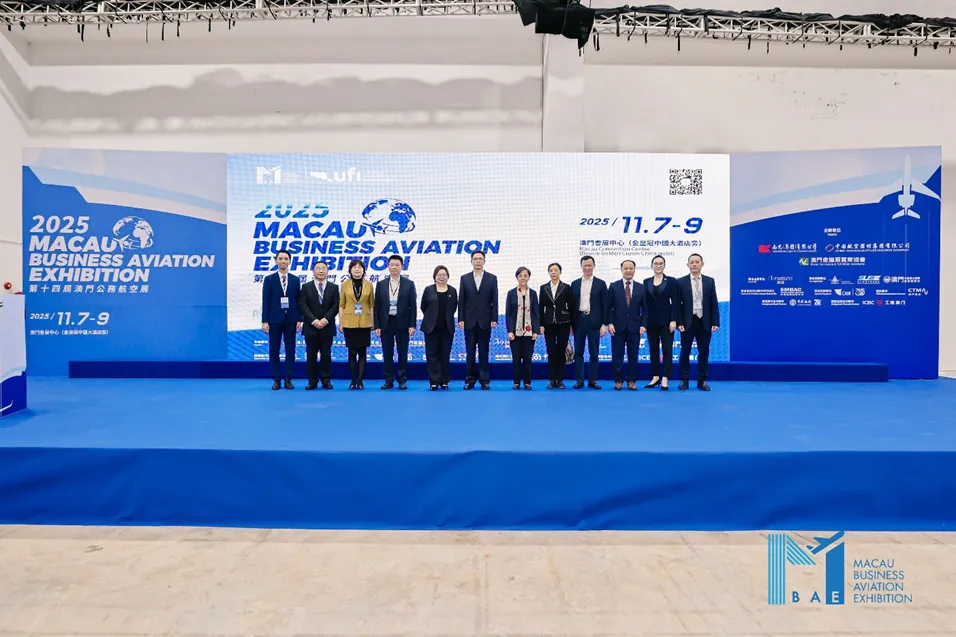
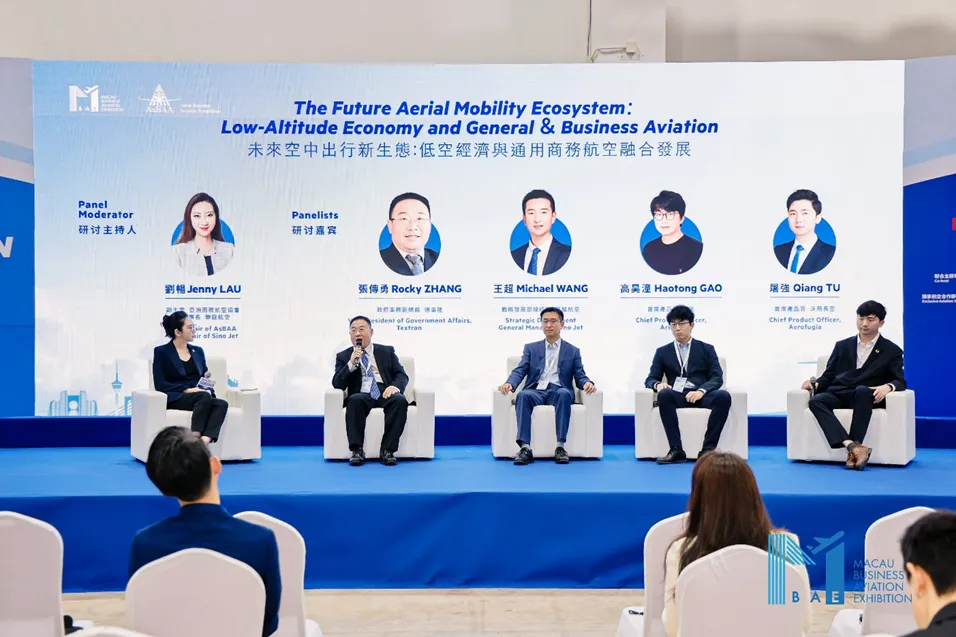
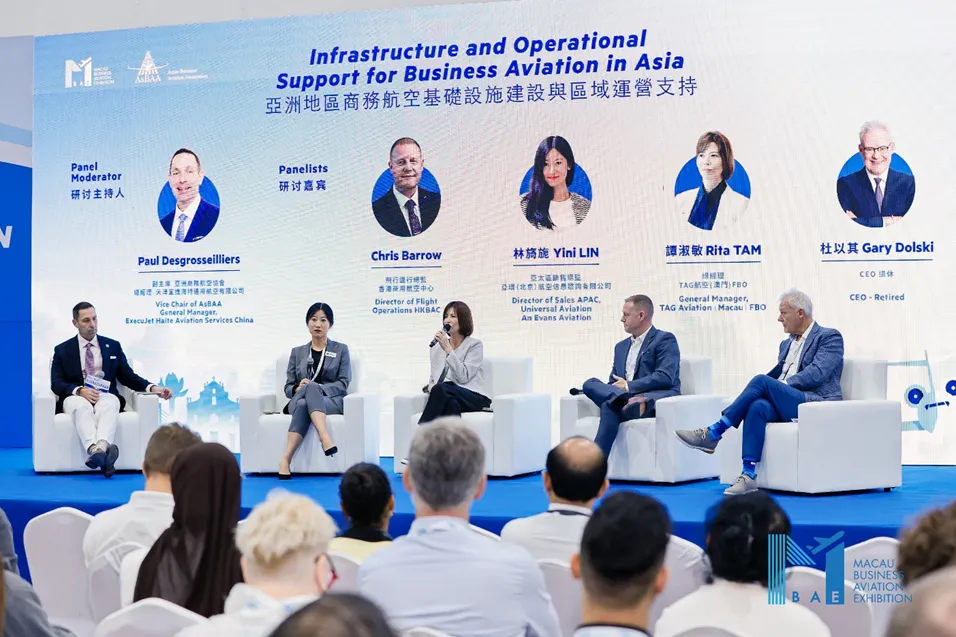

The 14th Macau Business Aviation Exhibition (MBAE 2025), held at the Macau Convention Centre on November 7, successfully brought together key industry leaders from across Asia Pacific to advance business aviation operations and services. It brought together key industry representatives including aircraft manufacturers, operators, data and charter service providers, integrated ground service providers, maintenance engineering enterprises, and low-altitude flight service providers, to create an efficient platform for industry exchange and collaboration. The event focused on integrating low-altitude economic development with premium business aviation services through the General and Business Aviation Executive Forum which was themed “Flying in Concert – Low-Altitude Economy & Business Aviation”. The forum highlighted the sector’s strategic collaborations towards building an efficient, low-carbon air mobility ecosystem and featured panel discussions addressing infrastructure and operational challenges across Asia Pacific Region.
Phil Balmer, Chairman, AsBAA, emphasized the forum’s dual role in exchanging insight and fostering practical industry integration, with an emphasis on safety, sustainability and intelligent regulation. Data presented showed a 6.2% year-on-year increase in China’s domestic business aviation operations through October 2025, driven by cross-border growth throughout Asia Pacific. Panel discussions underscored the importance of innovation alongside heritage, focusing on emerging technologies like electric vertical take-off and landing (eVTOL) aircraft, which have the potential to extend business aviation reach significantly. Calls were made for unified global safety standards, infrastructure development, and regulatory clarity, with specific initiatives recommended for the Guangdong-Hong Kong-Macao Greater Bay Area.
The event also addressed infrastructure challenges in Asia, highlighting hardware limitations in Northeast Asia and maintenance bottlenecks in Southeast Asia. Panelists advocated communicating the economic and social value of business aviation to attract investment and improve ecosystem health. Operational complexities spanning nearly 50 jurisdictions in Asia emphasized the need for regulatory coordination, balanced infrastructure, and talent development. Despite challenges, confidence remains high due to policy optimizations, cross-border flight growth, and emerging young talent.
Jenny Lau, Vice Chair of AsBAA, summarized in her closing remarks that business and general aviation are critical components of building a flexible and future-oriented transportation system. Lau further emphasized that future mobility will be a multidimensional, seamless, and multimodal system requiring the combined efforts of technology, policy, and industry to accelerate the advent of a new era.
View Full Photo Gallery HERE